

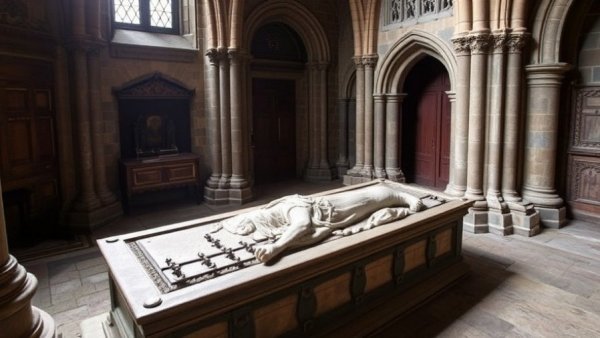
Revelations from the Ancient Past: Who Lies Beneath?
Westminster Abbey, a treasure trove of history nestled in the heart of London, has long been a focal point of exploration for archaeologists and historians alike. Its Roman sarcophagus, discovered over 150 years ago, has remained shrouded in mystery until recent scientific advances offered fresh insights into its enigmatic contents. What lies beneath the layers of time? This article explores the fascinating journey of uncovering the identity of a long-forgotten individual buried in the ancient coffin.
Unveiling the Mystery: Archaeological Insights
After its formal excavation in 1869, the limestone sarcophagus bore an inscription referencing Valerius Amandinus, a wealthy Briton from the era of 300-400 AD. However, as investigations progressed, evidence suggested that someone far more recent was interred within—a prominent medieval abbot from Westminster Abbey's monastic tradition. The recent archaeological efforts and updated dating techniques have helped reframe this understanding, leading researchers like Professor Warwick Rodwell to posit that the remains likely belong to either Abbot Aelfwig or Abbot Wulnoth, each of whom played significant roles in the Abbey’s history.
Historical Context: Two Contenders Emerge
Aelfwig, who died around 1020, was a key figure in Westminster Abbey's transition from a Benedictine monastery, while his successor, Wulnoth, died in 1049. Both abbots are believed to have made substantial contributions to the Abbey’s legacy, raising questions about their burial practices and the meanings that come with such elaborate sepulchers. The use of the Roman sarcophagus—a relic from an earlier age—hints at the respect held for these figures within their ecclesiastical context, as well as the fascinating practice of ‘recycling’ historical artifacts in burial rituals.
The Significance of Reused Artifacts
The act of repurposing the Roman coffin for a medieval abbot adds an intriguing layer to the understanding of cultural continuity in the region. During the 10th and 11th centuries, tomb practices evolved, and the choice to utilize a previously existing sarcophagus rather than create a new one might reflect both resourcefulness and a reverence for the past. Professor Rodwell suggests this choice speaks to the societal importance placed on the status of the deceased, aligning their memory with an artifact that had already stood the test of time. This practice also provides insights into the historical dialogues between ancient and medieval Britons.
Scientific Techniques: Shedding Light on the Past
Recent excavations, particularly those carried out by Pre-Construct Archaeology, highlight the innovative methods scientists use to illuminate the past. These investigations have employed modern techniques in archaeology that can radiocarbon date materials with unprecedented accuracy, pinpointing the skeleton’s age and providing context for its burial. By combining historical documents with modern scientific analysis, researchers are bridging the gap between past and present, forging a narrative that reveals much about the social and cultural fabric of medieval Britain.
Reflection on Medieval Life and Beyond
The mystery of Westminster Abbey's Roman coffin invites us to reflect on the broader societal structures of that time. The article underscores the impact of monastic leadership, while also painting a vivid picture of life during the medieval period. Through the lens of Aelfwig and Wulnoth, we see not only the spiritual leadership they offered but also their connections to the evolving landscape of England, illustrating how the remnants of the past can shape our modern understandings.
A Call to Curiosity: Exploring Heritage Sites
As fascinated as we might be about the revelations at Westminster Abbey, this story serves as a reminder of the importance of exploring and preserving our cultural heritage. Each archaeological discovery not only fuels our curiosity but enriches our understanding of the diverse influences that have shaped our world. So, whether you are a resident of Dallas exploring local culture or a history enthusiast, take the time to delve into the mysteries that surround you. After all, history is alive and waiting to be uncovered.





Write A Comment