

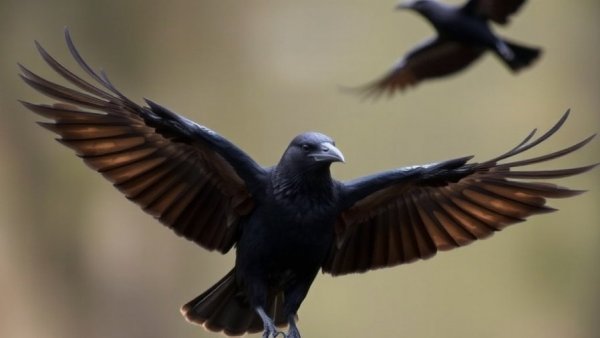
Crows Exhibit Super-Speed Decision Making
In a groundbreaking study conducted by researchers at the University of Tübingen, crows have been found to make visual decisions in an astonishing 235 milliseconds, outpacing both humans and monkeys. This discovery not only sheds light on the cognitive abilities of these remarkable birds but also opens up new avenues in our understanding of avian intelligence. Crows are known for their adaptability and intelligence, often displaying behaviors that suggest a high level of cognitive function, but this latest research underscores the depth of their decision-making abilities.
The recent experiments involved carrion crows identifying the direction of moving dots on a touchscreen, revealing their exceptional ability to analyze visual information rapidly without sacrificing accuracy. The study involved presenting the crows with a series of visual stimuli, and even in challenging conditions where the movement of dots was difficult to determine, the crows still managed to achieve almost 100% accuracy. This level of performance suggests that crows not only process information quickly but also possess a remarkable level of understanding regarding the stimuli they are observing.
The Nerve Behind the Quick Response
Further investigation into the decision-making process of crows revealed the active role of a brain region known as the nidopallium caudolaterale. This region, akin to the human prefrontal cortex, is crucial for processing information and executing decisions. Remarkably, neural signals associated with decision-making began mere milliseconds after the stimuli appeared—72 milliseconds, to be precise. This rapid neural activation highlights the efficiency of the crow's brain in processing competing stimuli, allowing them to make decisions rapidly while maintaining accuracy.
Implications for Understanding Avian Intelligence
The implications of these findings are profound. Crows, which have long been noted for their problem-solving skills, are now shown to possess decision-making capabilities similar to those found in primates. This insight challenges previous assumptions that cognitive processes are unique to larger-brained animals. It underlines the potential for different brain structures to produce similar cognitive outcomes, indicating that intelligence in animals may not strictly correlate with brain size or traditional cerebral architecture. Furthermore, this sheds light on the evolutionary advantages that rapid decision-making can confer in the wild, particularly in environments that require quick responses to predators or changing conditions.
Future Perspectives on Cognitive Research
As researchers continue to study avian intelligence, the possibility for practical applications emerges. If we can understand the neural mechanisms through which crows make decisions, this knowledge might translate into advancements in artificial intelligence and robotics. Insights gained from crows could inform algorithms, leading to enhanced decision-making systems in machines. This research presents exciting potential to improve technologies that rely on visual processing, similar to how crows interpret their surroundings. Furthermore, the findings may inspire future investigations into the decision-making capabilities of other bird species, paving the way for a broader understanding of animal cognition.
What This Means for Urban Living
For those living in urban environments, including major cities like Dallas, this cognitive prowess of crows can translate to a deeper appreciation of local wildlife. Crows are often seen in urban settings, and their intelligence can provide a fascinating perspective on adapting to human-influenced environments. Understanding how intelligent these birds are contributes to urban ecology discussions, aligning with lifestyle interests that emphasize harmony between urban settings and natural habitats. While navigating the bustling lifestyle in Dallas can present challenges, encounters with such intelligent creatures offer a unique connection to nature amidst city life, reminding residents of the diversity of life that exists alongside urban development.
Final Thoughts on Crows and Their Cognitive Skills
As we continue to explore the capabilities of our feathered friends, it’s crucial to consider what these discoveries mean for broader ecological interactions. Crows and other intelligent birds play essential roles in their environments, whether through their contributions to pest control or seed dispersal, and gaining insight into their decision-making not only enriches our understanding of animal behavior but also enhances our awareness of biodiversity and conservation efforts in areas like Dallas. Observing these remarkable creatures more mindfully could potentially offer us lessons in resilience, adaptation, and the intricate balance of urban ecosystems. Moreover, enhancing public interest in crows can encourage community initiatives focused on preserving natural habitats, thereby fostering a greater appreciation for the complexities of urban wildlife.





Write A Comment